How Long Does It Take to Decorate a Room? What Bishop's Stortford Homeowners Should Expect
Wondering how long it takes to decorate a room properly? We explain realistic timelines for every room type, from Bishop's Stortford to Harlow.

The honest answer: it depends on what "decorating" actually means
Most people asking how long it takes to decorate a room are really asking two different questions at once. The first is how long the painting itself takes. The second is how long the whole job takes, start to finish, including preparation, drying time and any remedial work along the way. Those two answers can be very different.
With over 20 years of experience decorating homes and commercial premises across Bishop's Stortford, Sawbridgeworth, Stansted Mountfitchet, Harlow, Great Dunmow, Takeley and Much Hadham, we have a clear view of what realistic timelines look like. This guide gives you that honestly, room by room.
Why preparation is where most of the time goes
Before a brush touches a wall, there is work to do. Filling cracks and holes, sanding back surfaces, cleaning down woodwork, masking off edges, protecting floors and furniture. In older properties across Hertfordshire and Essex, that preparation stage can take longer than the painting itself.
A room that looks "fine" to the naked eye can still need significant prep. Old paint that is flaking or chalking needs to be rubbed back. Woodwork with years of gloss built up needs cutting back to give the new coat something to grip. Skipping these steps is where a lot of DIY jobs go wrong, and it is why a professional finish looks and lasts the way it does.
Preparation is not a chore we rush through. It is the foundation of everything. For more on this, take a look at our article on interior painting and decorating in Bishop's Stortford: walls, ceilings and woodwork explained.
Room-by-room: realistic timelines for a professional decorator
These are working day estimates for a professional doing the job properly, including preparation, two coats and drying time between them. They are not estimates for a rushed single-coat job.
Small bedroom A straightforward small bedroom with walls, ceiling and woodwork (skirting, door and frame, window surround) typically takes one to two days. If the room has not been decorated in many years and the surfaces need significant work, allow two full days comfortably.
Standard living room or dining room A living room is usually the most time-intensive space in a house. Larger wall areas, more woodwork, often a chimney breast or fireplace surround to tackle. A living room done properly, with ceilings, walls and all woodwork, is realistically a two to three day job. Rooms with high ceilings, as you find in many of the older Victorian and Edwardian properties around Bishop's Stortford and Sawbridgeworth, will sit at the longer end of that.
Kitchen Kitchens vary a great deal. If it is walls and ceiling only, with units and appliances masked off, one to two days is reasonable. If there is woodwork around windows, a back door or a utility space attached, add time accordingly.
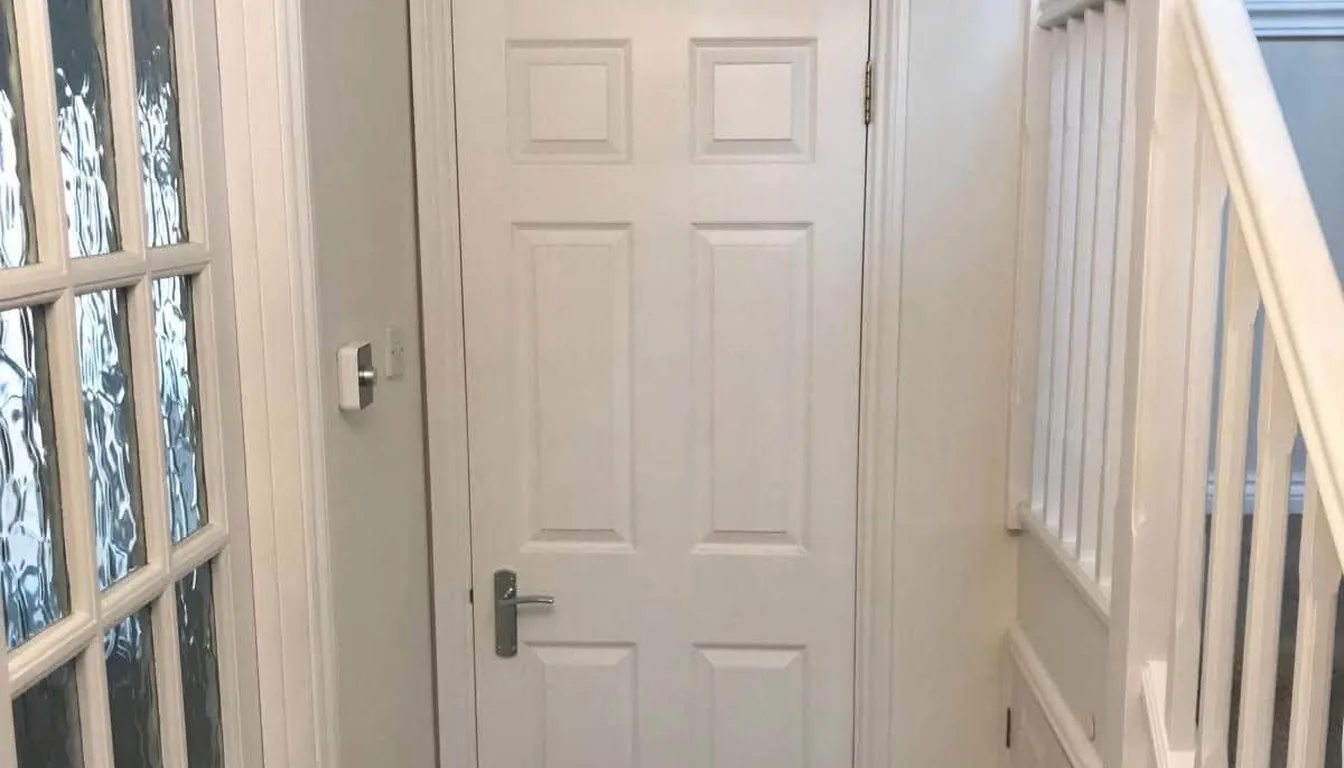
Hall, stairs and landing This is consistently the most underestimated decorating job in a home. The hall, stairs and landing is one continuous space with awkward angles, high ceilings, spindles and handrails, multiple doors and frames, and often a long drop from the landing ceiling. It is not unusual for a hall, stairs and landing to take three to four days when done thoroughly. Anyone telling you it can be done properly in a single day is cutting corners somewhere.
Bathroom Bathrooms are compact but fiddly. Cutting in around tiling, pipework and fittings takes care and time. A typical bathroom is a one to two day job.
Two coats: what that means for your timeline
A question we hear often is how long it takes to paint a room with two coats. The answer is not simply double the time for one coat, because the drying time between coats is built into the working day. A decorator will apply a first coat, allow it to dry properly (this varies by product type and conditions), then apply the second coat. In some cases, particularly on ceilings or new plaster, a mist coat or primer is needed before any finish coat goes on.
Trying to rush the drying time between coats is one of the most common mistakes in DIY decorating. The second coat traps moisture, the finish looks uneven, and the adhesion is compromised. We never rush that stage.
What affects the timeline beyond room size?
Room size is just the starting point. Several other factors shape how long a job takes.
- Condition of the surfaces. A room that has been well maintained and recently decorated is quicker to prepare than one that has not been touched in a decade.
- Number of colours. A single colour throughout is faster than cutting in multiple colours on walls, ceiling and woodwork.
- Ceiling height. High ceilings, common in period homes across Bishop's Stortford, Sawbridgeworth and Much Hadham, add time for safe access and working at height.
- Woodwork complexity. A room with panelled doors, a staircase, a fireplace surround and picture rails takes longer than a plain box room with a single door.
- New plaster. Freshly plastered walls need a mist coat and more drying time before finish coats can go on.
In what order should you redecorate a room?
The correct order matters. We always work top to bottom and from the inside out. Ceiling first, then walls, then woodwork (skirting, doors, frames, window surrounds). This way any splashes or drips from the ceiling land on surfaces that have not yet been painted. Cutting in carefully at each stage avoids going back over finished work.
For homeowners preparing a room before we arrive, our guide on preparing your room for a decorator explains exactly what helps and what to leave to us.
How often should a room be redecorated?
There is no single rule, but a well-decorated room in a family home will typically need refreshing every five to seven years for walls and ceilings, and a little more often for woodwork in high-traffic areas. Hallways, stairways and kitchens take more wear than bedrooms and tend to need attention sooner. In rental properties, the cycle is often shorter simply because of the volume of use.
If you are refreshing a property before putting it on the market or letting it out, the priority is a clean, neutral finish that photographs well and appeals broadly. We cover this in more detail in our piece on refreshing your home before selling or letting.
What the "3-5-7 rule" is, and why we do not follow it rigidly
You may have come across the so-called 3-5-7 rule for decorating, which is a design shorthand for balancing three colours in a room in proportions of roughly 60%, 30% and 10% (dominant, secondary and accent). It is a useful starting point for interior colour design, and we are happy to talk through colour choices with clients across our service area.
That said, it is a guideline, not a formula. Older properties in Bishop's Stortford and the surrounding villages have their own character, and what works in a new-build in Takeley may feel wrong in a Victorian terrace in Sawbridgeworth. We give practical colour advice based on the room, the light and what the homeowner actually wants to live with.
Can a room be painted in three hours?
Technically, yes, a small room with smooth walls and no woodwork could have one coat of paint applied in three hours. But that is not decorating a room. Preparation, two proper coats with drying time, and tidy finishing are what produce a result worth having. Three hours for a full decorating job, including prep and two coats, is not realistic for any room done to a standard worth paying for.
Frequently asked questions
How long does it take to paint a 12x12 room professionally? A 12x12 room (roughly 3.6m x 3.6m) with walls, ceiling and woodwork, properly prepared and finished with two coats, is typically a full day's work for a professional, sometimes extending into a second day if the surfaces need significant preparation or there is detailed woodwork to tackle.
How long does it take to paint a hall, stairs and landing? The hall, stairs and landing is one of the most time-consuming decorating jobs in a house. Realistically, allow three to four days for a professional to do it properly. The combination of high ceilings, awkward access, spindles, multiple doors and frames, and the sheer amount of cutting-in required all add time.
In what order should you redecorate a room? Always ceiling first, then walls, then woodwork. Working top to bottom means drips and splashes land on surfaces not yet painted. Within woodwork, we tackle doors and frames before skirting boards, again working from top to bottom.
How often should a room be redecorated? Most rooms in a family home benefit from redecorating every five to seven years. High-traffic areas such as hallways, stairways and kitchens may need attention more frequently. Rental properties often follow a shorter cycle due to heavier use.
Ready to talk through your decorating project?
If you have a room, a whole house or a commercial space that needs decorating across Bishop's Stortford, Stansted Mountfitchet, Sawbridgeworth, Harlow, Great Dunmow, Takeley or Much Hadham, we are happy to take a look and give you a clear picture of what the job involves. As a family-run business with over 20 years of experience, we take pride in our work and the reputation we have built for a superior finish.
Call us on 07443 679900 or send photos through our contact form to get the conversation started.